


Why the handoff is where most luxury renovations go wrong
The single most common failure point in a high-end renovation is the moment the designer hands a drawing package to a contractor and steps back. Here is why we chose to remove that moment entirely, and what it means for the quality of the finished result.
By Bal & Tim
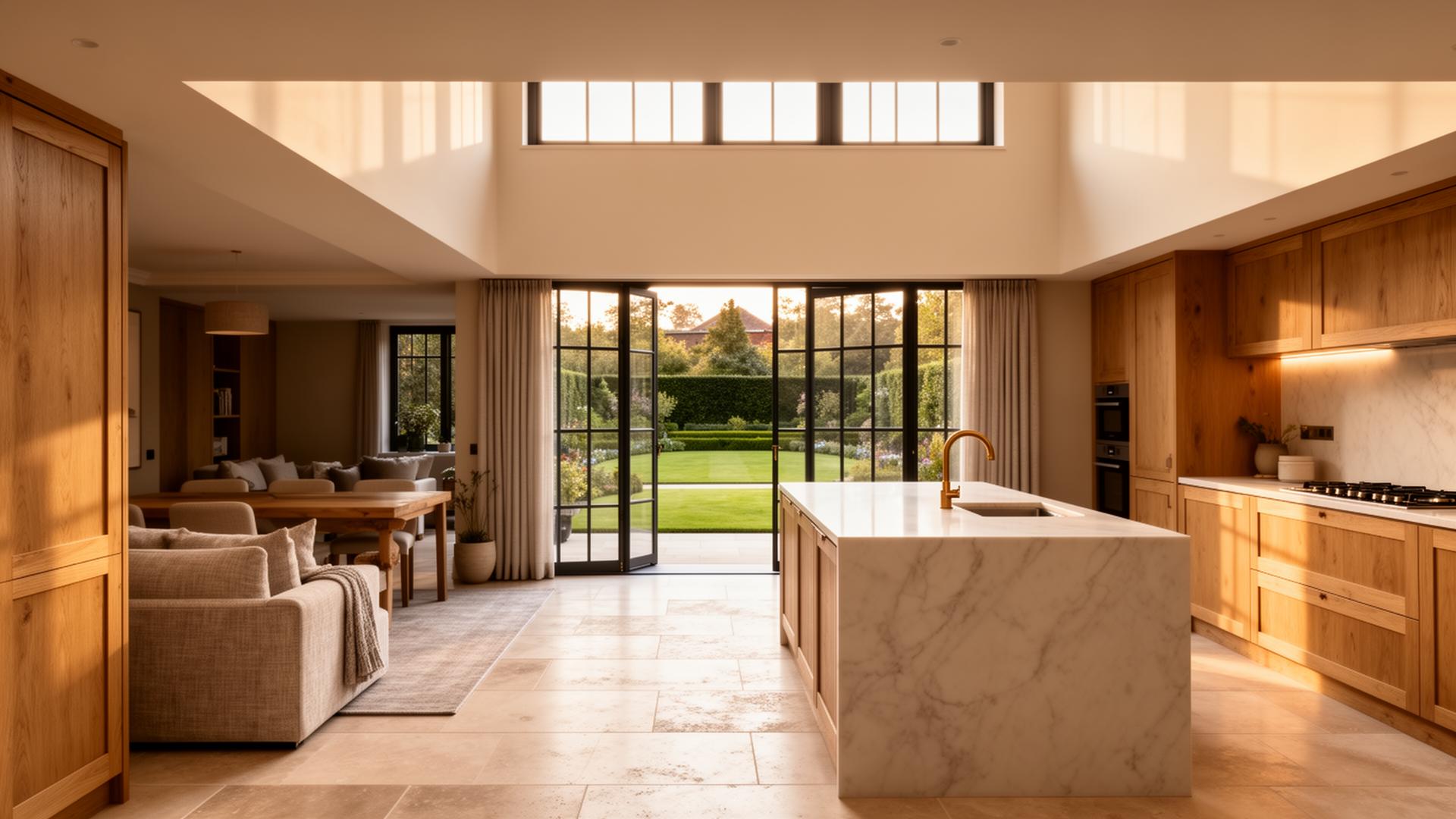
There is a version of luxury renovation that looks impeccable on paper. The designer is experienced, the drawings are detailed, the contractor comes well recommended. The brief is clear, the budget is set, and everyone shakes hands at a handover meeting before the site begins.
And then, gradually, almost imperceptibly, the design begins to change.
It starts with small things. A tile that is discontinued, substituted for something close but not the same. A structural beam that lands three centimetres lower than the drawings showed, shifting the ceiling height in the kitchen and pulling every other proportion slightly out. A lighting position moved on site because the electrician judged it easier. A door width narrowed by four centimetres to accommodate an unforeseen pipe run.
Each decision, in isolation, is reasonable. None of them is negligent. But by the time the client moves in, the home they are standing in is a palimpsest, the original design still visible underneath, but written over, again and again, by the practical demands of a build that the designer was not present to protect.
The design is not lost in a single bad decision. It is lost in thirty small ones, each made in the absence of the person who understands what was at stake.
Why the handoff happens
The traditional model of luxury renovation is structurally predisposed to this outcome. The designer and the contractor are separate businesses, with separate fees, separate reputations and, crucially, separate incentives. The designer's job ends, or feels as though it ends, when the drawings are issued. The contractor's job is to deliver a building within a programme and a budget. When those two pressures collide with an unexpected site condition, the person best placed to make the right decision is usually not in the room.
This is not a failure of skill on either side. It is a failure of structure. The handoff creates a seam in the project at precisely the moment when continuity matters most.
What we chose to do instead
When we founded Elmbridge Design & Renovations, we built the studio around the elimination of that seam. Bal and Tim are not a designer who commissions a contractor, and a contractor who executes a brief. They are co-founders of a single studio, with a shared fee structure, a shared reputation and a shared interest in the outcome of every project they take on together.
In practice, this means that the person who designed a room is present, in person or on the phone, when every significant decision is made on site. It means that the conversation about a beam height or a tile substitution happens between the two people who understand both what was specified and why, and what the structural reality actually requires. The decision is made with full knowledge of what is at stake. Not in the gap between two separate organisations.
It also means that Tim reviews every drawing before it leaves the studio. Not to approve it aesthetically, but to pressure-test it structurally, to identify, before work begins, any place where the design and the building might come into conflict. The handoff problem is partly solved in the design phase, before it becomes a site problem at all.
What this means for the finished result
The homes we complete look the way they were drawn. Not approximately. Not with the kind of small erosions that accumulate into a vague feeling of disappointment. The proportions are the proportions that were designed. The materials are the materials that were specified. The lighting is where the lighting was drawn.
This sounds like a low bar. It is not. In the luxury renovation market, it is rarer than it should be.
We tell clients this at the first meeting, and we mean it: when you work with Elmbridge Design & Renovations, the drawing is not a starting point for negotiation. It is what you will live in.
If you are planning a renovation in Elmbridge and want to understand how the integrated model works in practice, we would be glad to show you.